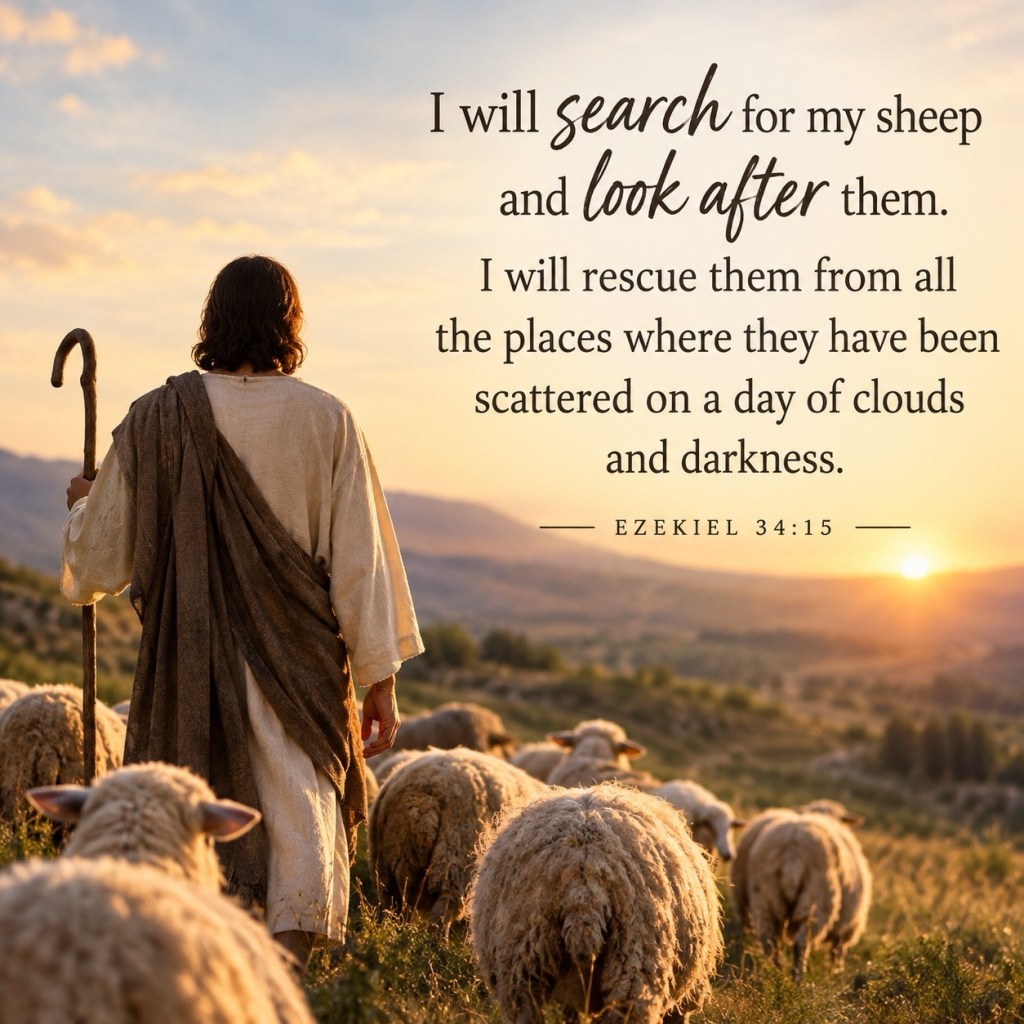
Ezekiel 34:11-16
Matthew 25:31-46
Scottish theologian and scholar William Barclay describes this parable as one of the most vivid parables Jesus ever told. The message of the parable is abundantly clear. God will judge us based on our reaction to human needs. God’s judgment does not take into consideration the amount of wealth we have amassed, the degrees we have obtained, or the celebrity we may enjoy.
The help we give is in simple things. In the parable the sheep did things that did not require great material wealth, but rather the simple acts of sharing food and water; taking time to visit a sick friend or someone in prison.
Being generous does not mean that we give from abundance, but rather that we give from the heart. Our generosity does not require an audience or recognition. Our acts of compassion reflect the heart of God.
When we compare this parable to the oracle found in Ezekiel 34, we see that that the shepherds charged with caring for God’s people were serving only their own desires. The shepherds have exploited their positions to serve themselves, have failed to carry out their responsibilities of caring for the sheep. Shepherd imagery is a common motif in Near Eastern royal ideology. The shepherds have failed to recognize their role as the Lord’s representatives.
The LORD intends to search out the sheep that have been scattered. Ezekiel describes the Lord as the one searching, rescuing, feeding, healing, and nurturing. God alone will be the shepherd, and the sheep will have good, pasture, the weak and injured will be strengthened. The LORD alone will be the shepherd. The result of God’s shepherding will be a restored experience of public justice.
The motif of the good shepherd is powerfully stated by Jesus in John 10. The sheep recognize the voice of the shepherd. The shepherd protects the sheep and ultimately gives his life for the sheep.
The excuse is “when did we see you…?” It is an excuse that relies for acquittal on ignorance. After all, we reason, “I can’t be held accountable for something I didn’t know.” But apparently, I can be held responsible acting or not acting compassionately toward my neighbor. There is an expectation that we will treat others as we would treat Christ.
Sheep depict God’s people. Judgment is by separation. The vindicated, the righteous, have responded positively to the proclamation and its messengers. They take part in God’s established empire. Their positive response is expressed in deeds of mercy that imitate Jesus’ ministry and manifest God’s empire in a sinful world.
The phrases least of these and members of my family refer to disciples in mission. The righteous have lived a life consistent with God’s purpose. Jesus identifies with the poor and desperate. Those who have not welcomed the proclamation with a lived response are condemned. They have not “served” Jesus. Disciples live lives of service among the marginal nobodies, in opposition to the hierarchical world of exploitative and self-serving power, and in imitation of Jesus. (New Interpreter’s Study Bible)
It is a challenging parable and a stark picture of separation for those who ignore the “least of these.” We share not out of our abundance, but rather from the heart.